
Blog
Remote Operations Manager Vs In-House: Which Is Better For Your Growth?12th March 2026
Let’s have a heart-to-heart for a second. If you’re reading this, you’re probably at that “good-problem-to-have” stage of business. You’ve built something great, the customers are coming in, but you are absolutely drowning in the day-to-day. You’re the CEO, the lead salesperson, the customer support rep, and the person who remembers to buy the coffee pods.
You know you need help. Specifically, you need someone to own the “how” of your business so you can focus on the “why.” You need an Operations Manager.
But here’s where the headache starts: Do you hire someone to sit in an office next to you (In-House), or do you bring on a Remote Operations Manager?
I’ve been on both sides of this fence, and I’ve seen small businesses thrive and fail based on this one decision. There’s no “one size fits all,” but there is definitely a “best for right now.” Let’s break down the reality of these two paths so you can stop overthinking and start growing.
The Growth Trap: Why You Can’t Keep Doing It All
Before we look at the “where,” let’s talk about the “what.” A lot of entrepreneurs I talk to think they just need a “helper.” But as you scale, a helper isn’t enough. You need systems. You need someone who looks at your messy Google Drive and sees a streamlined filing system. You need someone who takes the “mental load” of project management off your plate.
If you don’t make this hire, you hit a ceiling. You can’t sell more because you can’t fulfill more. You’re stuck.

The In-House Choice: The Comfort of the Familiar
There is something undeniably comforting about having your Operations Manager in the same building. You can swivel your chair around and ask a quick question. You can grab lunch together and talk about the five-year plan.
The Pros of In-House
- Total Cultural Alignment: It’s easier to “breathe” the company culture when you’re in the same room. They see the fires you’re fighting in real-time.
- Direct Oversight: If you’re the type of leader who needs to see the work happening to feel “in control,” in-house gives you that peace of mind.
- Instant Feedback: No waiting for a Slack reply or a Zoom call.
The Reality Check (The Cons)
Here’s where I have to be the bearer of bad news. An in-house hire is expensive: and I’m not just talking about the salary.
- Overhead: You need a desk, a high-end laptop, a chair that doesn’t ruin their back, and extra office space.
- The “Benefit” Burden: Employers’ NI, pension contributions, paid time off, and payroll admin.
- The Recruitment Lag: Finding a local rockstar can take months. In that time, how much growth are you losing?
👉 Pro-Tip: If your business requires physical inventory management or on-site team coordination, in-house is usually a must. But for service-based businesses? It’s often an expensive luxury.
The Remote Operations Manager: The Agility Play
In 2026, the world has changed. Remote isn’t just a “backup” anymore; for many of the fastest-growing SMEs, it’s the primary strategy. When you hire a Remote Operations Manager, you’re buying results, not hours in a chair.
The Pros of Remote
- Cost Efficiency: Research from organizations like Global Workplace Analytics and the Irish Government (IGEES) shows remote arrangements can reduce operational costs by up to 30% (source). You aren’t paying for their electricity or their commute.
- Access to Top-Tier Talent: Why limit yourself to managers living within a 20-mile radius of your office? You can hire the best mind in the country (or the world).
- Focus on Outcomes: Remote work forces you to build better systems. Because you can’t “see” them working, you start measuring what actually matters: output.
The Cons
- Communication Gaps: If your communication isn’t intentional, things can slip through the cracks.
- Trust Building: It takes a little longer to feel that “we’re in this together” vibe when you’re communicating through a screen.

Let’s Talk Numbers: A Granular Breakdown
Let’s look at the “hidden” costs of an In-House Operations Manager v’s a Remote/Partner solution like Bee Assured Business Solutions.
| Expense Category | In-House Manager (Estimated) | Remote Partner / Services |
| Annual Salary/Fee | £45,000 – £65,000 | £33,000 – £55,000 |
| Recruitment Fee | £6,750+ (One-time) | £0 |
| Office & Tech | £3,000+ | £0 |
| Benefits, NI & Pension | £8,500 – £12,000 | £0 |
| Onboarding Time | 3 – 6 Months | 2 – 4 Weeks |
| Total Year 1 Cost | £63,250+ |
£33,000 – £55,000 |
The Verdict on Cost: For an SME, that £30,000+ difference isn’t just “savings.” That’s your marketing budget for the next year. That’s a new product launch. That’s your “rainy day” fund.
Scaling Without the Growing Pains
When you’re in growth mode, flexibility is your greatest asset. If you hire an in-house manager and the market dips, you’re faced with the gut-wrenching task of redundancies.
With a remote solution, specifically a specialised agency like ours at Bee Assured Business Solutions, you can scale up or down based on your needs. We offer a business management service that is designed to grow with you. It’s about having the support you need now, without the permanent overhead that keeps you up at night.
The Costs of Being Self-Employed
Let’s look at the numbers. I run a work-from-home business where I sell my time, not a product. It’s probably one of the most cost-efficient setups out there—no stock, no premises, no vehicles to maintain. Even so, here’s what it costs me annually:
- ICO registration: £52
- Phone bill: £420
- Insurance: £720
- Software subscriptions: £1,950
- Accountancy: £600
- Office costs: £144
- Memberships: £540
That’s a total of £4,426 per year—and that doesn’t even include the initial outlay for equipment like a laptop (£1,000), phone (£800), or headphones (£100).
Some businesses if not most will also have additional costs which I have not factored in, such as:
– Office/workshop rent
– Tools
– Machinery
– Stock
– Consumables
– Heating & Lighting
– Phone bill
– Employee costs (I also have these costs)
And let’s not forget the unbillable hours: marketing, networking, handling enquiries, onboarding clients, customer service, researching, and training to keep skills up to date (which often costs money too).
Breaking It Down
Here’s how it looks for my business:
- I’ve based this on working 44 weeks per year (to account for quiet periods, illness, or holidays).
- I can realistically bill for 30 hours per week because the rest of my time is spent running the business.
- I also haven’t accounted for the fact I have employees costs to cover.
So, if I want to earn minimum wage (£23,809) and cover my business costs (£4,426), I need to charge at least £21.39 per hour.
But here’s the thing: I didn’t become self-employed to scrape by on minimum wage.
I chose this path to create a better life for myself and my family, to have the flexibility to spend time with my kids during school holidays, and to use the skills I’ve worked hard to develop over my career.
So, let’s say I charge £25 per hour.
What £25 Per Hour Really Looks Like
At £25 per hour, working 30 hours per week for 44 weeks, I’d earn £33,000 per year. After tax and National Insurance, that’s a take-home pay of £2,239 per month.
Now, let’s deduct my business costs of £368 per month. That leaves me with £1,871 per month.
From that, I still have to pay my household bills: mortgage, council tax, car and fuel costs, food, utilities, and so on.
Even at £25 per hour, I’m hardly living a life of luxury.
Why Your Rates Matter
Yes, I could work more hours, and yes, some years are better than others. But I also need to save for rainy days (like when my laptop dies or my car breaks down) and invest in my development to keep improving for my clients.
So, if you’re self-employed or freelancing, don’t be afraid to stand your ground when someone questions your rates. You’re not “overcharging”—you’re simply covering your costs and valuing your time, skills, and experience.
And if you’re a client reading this, I hope it gives you a better understanding of what goes into that hourly rate.
Final Thoughts
Being self-employed isn’t just a job—it’s a lifestyle. It’s flexibility, freedom, and fulfillment, but it’s also risk, responsibility, and a lot of hard work.
So, the next time someone questions your rates, remember this: you’re not just charging for your time—you’re charging for your expertise, your costs, and the value you bring to the table.
And £25 per hour? That’s the minimum you should be charging.
Cultural Alignment: The “Invisible” Factor
One of the biggest pushbacks I hear is: “But will they care about my business as much as someone sitting next to me?”
Here’s the truth: Someone’s physical location has zero impact on their work ethic. I’ve seen in-house employees spend too much time on unecessary work or non work, where self employed remote managers are constantly keepin an eye on the clock to make sure everything they do is adding value for the client. We can’t add the toilet or the lunch break to the timesheet!
Engagement comes from leadership, not floor plans. If you treat a remote manager as a true partner, give them autonomy, and share your vision clearly, they will be more loyal than someone who’s just showing up for the free office snacks.
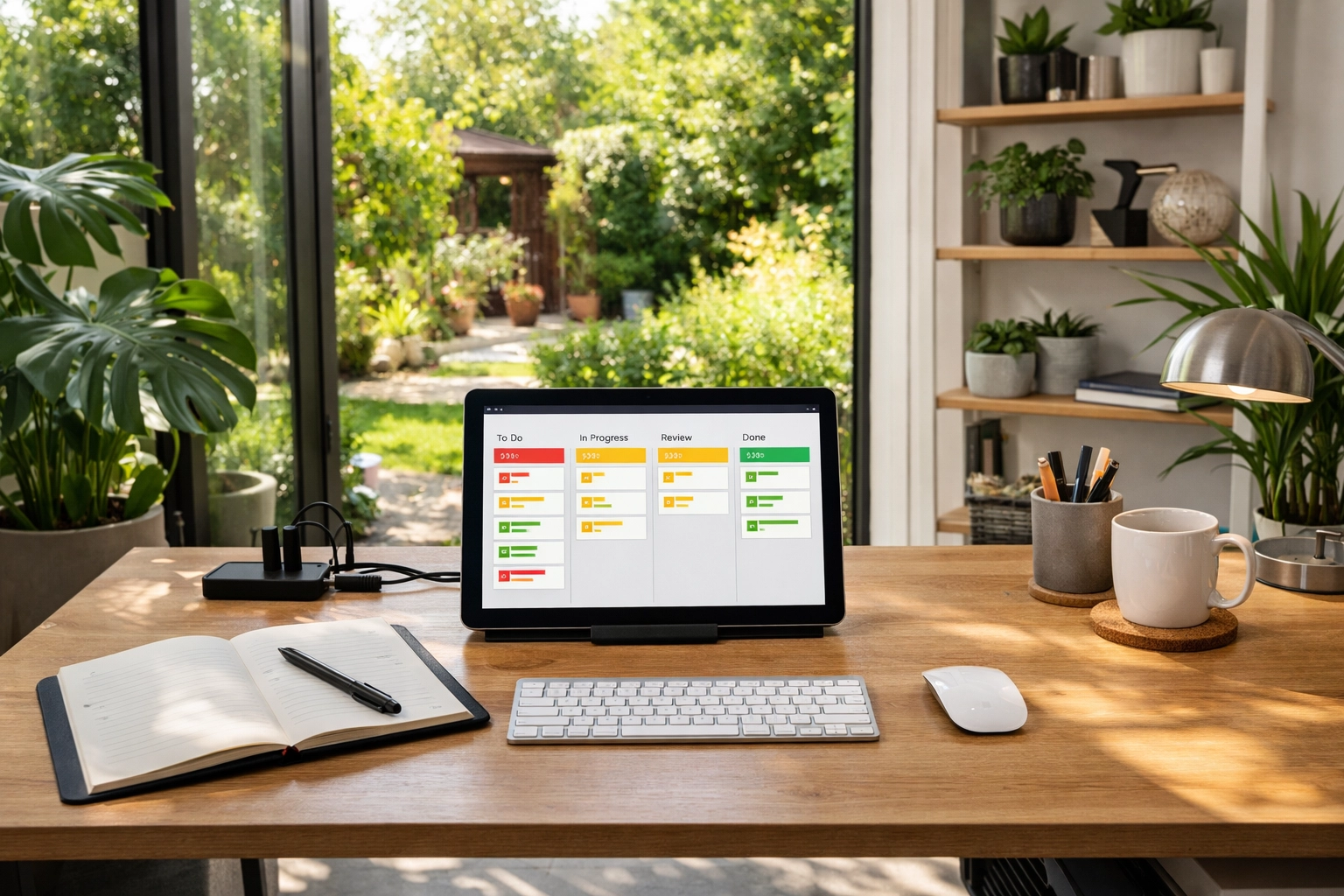
✅ Pro-Tip: Use tools like Teams or Slack for culture and Teamwork or Monday for operations. If the workflow is transparent, the location becomes irrelevant.
Why Bee Assured Business Solutions Is Your “Middle Ground”
You might be thinking, “I want the expertise of a manager, but I don’t want to manage another person.”
That’s exactly why we exist. We aren’t just a directory of names; we provide Business Support Services that act as your external operations arm. We handle the back-office heavy lifting, the administrative puzzles, and the manual admin that is currently sucking the life out of your calendar.
We provide the “No-Nonsense” approach to efficiency. We don’t need a desk. We don’t need paid annual leave or a pension. We just need to know your goals so we can help you hit them.

Final Thoughts: Which Is Better For Your Growth?
If you are a massive corporation with a 10-year lease on a skyscraper, go ahead and hire in-house. You’ve got the budget to burn.
But if you are a growth-minded entrepreneur or a small business owner who needs to be lean, mean, and agile, the Remote Operations Manager is the clear winner. It reduces your risk, protects your cash flow, and gives you back the one thing you can’t buy more of: Time.
Don’t let the mental load of operations hold your vision hostage. Whether you’re looking for Remote Administrative Support or a full-scale operations overhaul, the goal is the same: Get you back into your zone of genius.
Ready to stop “scraping by” and start scaling?
Let’s talk about how we can take the weight off your shoulders. Contact us today for a free consultation and let’s see which of our solutions fits your growth path.
You built the business. Now, let’s build the machine that runs it.